AFGHANISTAN - THE WAR LOGS
Thursday, August 5, 2010
Sunday, July 25, 2010
Task Force 373 – special forces hunting top Taliban
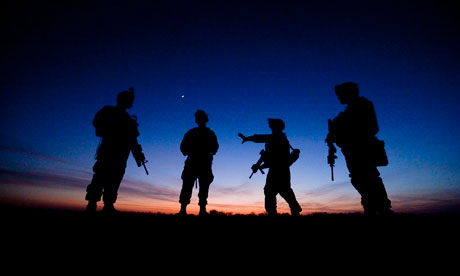
The Nato coalition in Afghanistan has been using an undisclosed "black" unit of special forces, Task Force 373, to hunt down targets for death or detention without trial. Details of more than 2,000 senior figures from the Taliban and al-Qaida are held on a "kill or capture" list, known as Jpel, the joint prioritised effects list.
In many cases, the unit has set out to seize a target for internment, but in others it has simply killed them without attempting to capture. The logs reveal that TF 373 has also killed civilian men, women and children and even Afghan police officers who have strayed into its path.
The United Nations' special rapporteur for human rights, Professor Philip Alston, went to Afghanistan in May 2008 to investigate rumours of extrajudicial killings. He warned that international forces were neither transparent nor accountable and that Afghans who attempted to find out who had killed their loved ones "often come away empty-handed, frustrated and bitter".
Now, for the first time, the leaked war logs reveal details of deadly missions by TF 373 and other units hunting down Jpel targets that were previously hidden behind a screen of misinformation. They raise fundamental questions about the legality of the killings and of the long-term imprisonment without trial, and also pragmatically about the impact of a tactic which is inherently likely to kill, injure and alienate the innocent bystanders whose support the coalition craves.
On the night of Monday 11 June 2007, the leaked logs reveal, the taskforce set out with Afghan special forces to capture or kill a Taliban commander named Qarl Ur-Rahman in a valley near Jalalabad. As they approached the target in the darkness, somebody shone a torch on them. A firefight developed, and the taskforce called in an AC-130 gunship, which strafed the area with cannon fire: "The original mission was aborted and TF 373 broke contact and returned to base. Follow-up Report: 7 x ANP KIA, 4 x WIA." In plain language: they discovered that the people they had been shooting in the dark were Afghan police officers, seven of whom were now dead and four wounded.
The coalition put out a press release which referred to the firefight and the air support and then failed entirely to record that they had just killed or wounded 11 police officers. But, evidently fearing that the truth might leak, it added: "There was nothing during the firefight to indicate the opposing force was friendly. The individuals who fired on coalition forces were not in uniform." The involvement of TF 373 was not mentioned, and the story didn't get out.
However, the incident immediately rebounded into the fragile links which other elements of the coalition had been trying to build with local communities. An internal report shows that the next day Lieutenant Colonel Gordon Phillips, commander of the Provincial Reconstruction Team, took senior officers to meet the provincial governor, Gul Agha Sherzai, who accepted that this was "an unfortunate incident that occurred among friends". They agreed to pay compensation to the bereaved families, and Phillips "reiterated our support to prevent these types of events from occurring again".
Yet, later that week, on Sunday 17 June, as Sherzai hosted a "shura" council at which he attempted to reassure tribal leaders about the safety of coalition operations, TF 373 launched another mission, hundreds of miles south in Paktika province. The target was a notorious Libyan fighter, Abu Laith al-Libi. The unit was armed with a new weapon, known as Himars – High Mobility Artillery Rocket System – a pod of six missiles on the back of a small truck.
The plan was to launch five rockets at targets in the village of Nangar Khel where TF 373 believed Libi was hiding and then to send in ground troops. The result was that they failed to find Libi but killed six Taliban fighters and then, when they approached the rubble of a madrasa, they found "initial assessment of 7 x NC KIA" which translates as seven non-combatants killed in action. All of them were children. One of them was still alive in the rubble: "The Med TM immediately cleared debris from the mouth and performed CPR." After 20 minutes, the child died.
Children
The coalition made a press statement which owned up to the death of the children and claimed that troops "had surveillance on the compound all day and saw no indications there were children inside the building". That claim is consistent with the leaked log. A press release also claimed that Taliban fighters, who undoubtedly were in the compound, had used the children as a shield.
The log refers to an unnamed "elder" who is said to have "stated that the children were held against their will" but, against that, there is no suggestion that there were any Taliban in the madrasa where the children died.
The rest of the press release was certainly misleading. It suggested that coalition forces had attacked the compound because of "nefarious activity" there, when the reality was that they had gone there to kill or capture Libi.
It made no mention at all of Libi, nor of the failure of the mission (although that was revealed later by NBC News in the United States). Crucially, it failed to record that TF 373 had fired five rockets, destroying the madrasa and other buildings and killing seven children, before anybody had fired on them – that this looked like a mission to kill and not to capture. Indeed, this was clearly deliberately suppressed.
The internal report was marked not only "secret" but also "Noforn", ie not to be shared with the foreign elements of the coalition. And the source of this anxiety is explicit: "The knowledge that TF 373 conducted a HIMARS strike must be protected." And it was. This crucial fact remained secret, as did TF 373's involvement.
Again, the lethal attack caused political problems. The provincial governor arranged compensation and held a shura with local leaders when, according to an internal US report, "he pressed the Talking Points given to him and added a few of his own that followed in line with our current story". Libi remained targeted for death and was killed in Pakistan seven months later by a missile from an unmanned CIA Predator.
In spite of this tension between political and military operations, TF 373 continued to engage in highly destructive attacks. Four months later, on 4 October, they confronted Taliban fighters in a village called Laswanday, only 6 miles from the village where they had killed the seven children. The Taliban appear to have retreated by the time TF 373 called in air support to drop 500lb bombs on the house from which the fighters had been firing.
The final outcome, listed tersely at the end of the leaked log: 12 US wounded, two teenage girls and a 10-year-old boy wounded, one girl killed, one woman killed, four civilian men killed, one donkey killed, one dog killed, several chickens killed, no enemy killed, no enemy wounded, no enemy detained.
The coalition put out a statement claiming falsely to have killed several militants and making no mention of any dead civilians; and later added that "several non-combatants were found dead and several others wounded" without giving any numbers or details.
This time, the political teams tried a far less conciliatory approach with local people. In spite of discovering that the dead civilians came from one family, one of whom had been found with his hands tied behind his back, suggesting that the Taliban were unwelcome intruders in their home, senior officials travelled to the stricken village where they "stressed that the fault of the deaths of the innocent lies on the villagers who did not resist the insurgents and their anti-government activities … [and] chastised a villager who condemned the compound shooting". Nevertheless, an internal report concluded that there was "little or no protest" over the incident.
Concealment
The concealment of TF 373's role is a constant theme. There was global publicity in October 2009 when US helicopters were involved in two separate crashes in one day, but even then it was concealed that the four soldiers who died in one of the incidents were from TF 373.
The pursuit of these "high value targets" is evidently embedded deep in coalition tactics. The Jpel list assigns an individual serial number to each of those targeted for kill or capture and by October 2009 this had reached 2,058.
The process of choosing targets reaches high into the military command. According to their published US Field Manual on Counter Insurgency, No FM3-24, it is policy to choose targets "to engage as potential counter-insurgency supporters, targets to isolate from the population and targets to eliminate".
A joint targeting working group meets each week to consider Target Nomination Packets and has direct input from the Combined Forces Command and its divisional HQ, as well as from lawyers, operational command and intelligence units including the CIA.
Among those who are listed as being located and killed by TF 373 are Shah Agha, described as an intelligence officer for an IED cell, who was killed with four other men on 1 June 2009; Amir Jan Mutaki, described as a Taliban sub-commander who had organised ambushes on coalition forces, who was shot dead from the air in a TF 373 mission on 24 June 2009; and a target codenamed Ballentine, who was killed on 16 November 2009 during an attack in the village of Lewani, in which a local woman also died.
The logs include references to the tracing and killing of other targets on the Jpel list, which do not identify TF 373 as the unit responsible. It is possible that some of the other taskforce names and numbers which show up in this context are cover names for 373, or for British special forces, 500 of whom are based in southern Afghanistan and are reported to have been involved in kill/capture missions, including the shooting in July 2008 of Mullah Bismullah.
Some of these "non 373" operations involve the use of unmanned drones to fire missiles to kill the target: one codenamed Beethoven, on 20 October 2008; one named Janan on 6 November 2008; and an unnamed Jpel target who was hit with a hellfire missile near Khan Neshin on 21 August 2009 while travelling in a car with other passengers (the log records "no squirters [bodies moving about] recorded").
Other Jpel targets were traced and then bombed from the air. One, codenamed Newcastle, was located with four other men on 26 November 2007. The house they were in was then hit with 500lb bombs. "No identifiable features recovered," the log records.
Two other Jpel targets, identified only by serial numbers, were killed on 16 February 2009 when two F-15 bombers dropped four 500lb bombs on a Jpel target: "There are various and conflicting reports from multiple sources alleging civilian casualties … A large number of local nationals were on site during the investigation displaying a hostile attitude so the investigation team did not continue sorting through the site."
One of the leaked logs contains a summary of a conference call on 8 March 2008 when the then head of the Afghan National Directorate of Security, Amrullah Saleh, tells senior American officers that three named Taliban commanders in Kapisa province are "not reconcilable and must be taken out". The senior coalition officer "noted that there would be a meeting with the Kapisa NDS to determine how to approach this issue."
It is not clear whether "taken out" meant "killed" and the logs do not record any of their deaths. But one of them, Qari Baryal, who was ranked seventh in the Jpel list, had already been targeted for killing two months earlier.
On 12 January 2008, after tracking his movements for 24 hours, the coalition established that he was holding a large meeting with other men in a compound in Pashkari and sent planes which dropped six 500lb bombs and followed up with five strafing runs to shoot those fleeing the scene.
The report records that some 70 people ran to the compound and started digging into the rubble, on which there were "pools of blood", but subsequent reports suggest that Baryal survived and continued to plan rocket attacks and suicide bombings.
Numerous logs show Jpel targets being captured and transferred to a special prison, known as Btif, the Bagram Theatre Internment Facility. There is no indication of prisoners being charged or tried, and previous press reports have suggested that men have been detained there for years without any legal process in communal cages inside vast old air hangars. As each target is captured, he is assigned a serial number. By December 2009, this showed that a total of 4,288 prisoners, some aged as young as 16, had been held at Btif, with 757 still in custody.
Who are TF373?
The leaked war logs show that Task Force 373 uses at least three bases in Afghanistan, in Kabul, Kandahar and Khost. Although it works alongside special forces from Afghanistan and other coalition nations, it appears to be drawing its own troops from the 7th Special Forces Group at Fort Bragg, North Carolina and to travel on missions in Chinook and Cobra helicopters flown by 160th special operations aviation regiment, based at Hunter Army Airfield, Georgia.
In many cases, the unit has set out to seize a target for internment, but in others it has simply killed them without attempting to capture. The logs reveal that TF 373 has also killed civilian men, women and children and even Afghan police officers who have strayed into its path.
The United Nations' special rapporteur for human rights, Professor Philip Alston, went to Afghanistan in May 2008 to investigate rumours of extrajudicial killings. He warned that international forces were neither transparent nor accountable and that Afghans who attempted to find out who had killed their loved ones "often come away empty-handed, frustrated and bitter".
Now, for the first time, the leaked war logs reveal details of deadly missions by TF 373 and other units hunting down Jpel targets that were previously hidden behind a screen of misinformation. They raise fundamental questions about the legality of the killings and of the long-term imprisonment without trial, and also pragmatically about the impact of a tactic which is inherently likely to kill, injure and alienate the innocent bystanders whose support the coalition craves.
On the night of Monday 11 June 2007, the leaked logs reveal, the taskforce set out with Afghan special forces to capture or kill a Taliban commander named Qarl Ur-Rahman in a valley near Jalalabad. As they approached the target in the darkness, somebody shone a torch on them. A firefight developed, and the taskforce called in an AC-130 gunship, which strafed the area with cannon fire: "The original mission was aborted and TF 373 broke contact and returned to base. Follow-up Report: 7 x ANP KIA, 4 x WIA." In plain language: they discovered that the people they had been shooting in the dark were Afghan police officers, seven of whom were now dead and four wounded.
The coalition put out a press release which referred to the firefight and the air support and then failed entirely to record that they had just killed or wounded 11 police officers. But, evidently fearing that the truth might leak, it added: "There was nothing during the firefight to indicate the opposing force was friendly. The individuals who fired on coalition forces were not in uniform." The involvement of TF 373 was not mentioned, and the story didn't get out.
However, the incident immediately rebounded into the fragile links which other elements of the coalition had been trying to build with local communities. An internal report shows that the next day Lieutenant Colonel Gordon Phillips, commander of the Provincial Reconstruction Team, took senior officers to meet the provincial governor, Gul Agha Sherzai, who accepted that this was "an unfortunate incident that occurred among friends". They agreed to pay compensation to the bereaved families, and Phillips "reiterated our support to prevent these types of events from occurring again".
Yet, later that week, on Sunday 17 June, as Sherzai hosted a "shura" council at which he attempted to reassure tribal leaders about the safety of coalition operations, TF 373 launched another mission, hundreds of miles south in Paktika province. The target was a notorious Libyan fighter, Abu Laith al-Libi. The unit was armed with a new weapon, known as Himars – High Mobility Artillery Rocket System – a pod of six missiles on the back of a small truck.
The plan was to launch five rockets at targets in the village of Nangar Khel where TF 373 believed Libi was hiding and then to send in ground troops. The result was that they failed to find Libi but killed six Taliban fighters and then, when they approached the rubble of a madrasa, they found "initial assessment of 7 x NC KIA" which translates as seven non-combatants killed in action. All of them were children. One of them was still alive in the rubble: "The Med TM immediately cleared debris from the mouth and performed CPR." After 20 minutes, the child died.
Children
The coalition made a press statement which owned up to the death of the children and claimed that troops "had surveillance on the compound all day and saw no indications there were children inside the building". That claim is consistent with the leaked log. A press release also claimed that Taliban fighters, who undoubtedly were in the compound, had used the children as a shield.
The log refers to an unnamed "elder" who is said to have "stated that the children were held against their will" but, against that, there is no suggestion that there were any Taliban in the madrasa where the children died.
The rest of the press release was certainly misleading. It suggested that coalition forces had attacked the compound because of "nefarious activity" there, when the reality was that they had gone there to kill or capture Libi.
It made no mention at all of Libi, nor of the failure of the mission (although that was revealed later by NBC News in the United States). Crucially, it failed to record that TF 373 had fired five rockets, destroying the madrasa and other buildings and killing seven children, before anybody had fired on them – that this looked like a mission to kill and not to capture. Indeed, this was clearly deliberately suppressed.
The internal report was marked not only "secret" but also "Noforn", ie not to be shared with the foreign elements of the coalition. And the source of this anxiety is explicit: "The knowledge that TF 373 conducted a HIMARS strike must be protected." And it was. This crucial fact remained secret, as did TF 373's involvement.
Again, the lethal attack caused political problems. The provincial governor arranged compensation and held a shura with local leaders when, according to an internal US report, "he pressed the Talking Points given to him and added a few of his own that followed in line with our current story". Libi remained targeted for death and was killed in Pakistan seven months later by a missile from an unmanned CIA Predator.
In spite of this tension between political and military operations, TF 373 continued to engage in highly destructive attacks. Four months later, on 4 October, they confronted Taliban fighters in a village called Laswanday, only 6 miles from the village where they had killed the seven children. The Taliban appear to have retreated by the time TF 373 called in air support to drop 500lb bombs on the house from which the fighters had been firing.
The final outcome, listed tersely at the end of the leaked log: 12 US wounded, two teenage girls and a 10-year-old boy wounded, one girl killed, one woman killed, four civilian men killed, one donkey killed, one dog killed, several chickens killed, no enemy killed, no enemy wounded, no enemy detained.
The coalition put out a statement claiming falsely to have killed several militants and making no mention of any dead civilians; and later added that "several non-combatants were found dead and several others wounded" without giving any numbers or details.
This time, the political teams tried a far less conciliatory approach with local people. In spite of discovering that the dead civilians came from one family, one of whom had been found with his hands tied behind his back, suggesting that the Taliban were unwelcome intruders in their home, senior officials travelled to the stricken village where they "stressed that the fault of the deaths of the innocent lies on the villagers who did not resist the insurgents and their anti-government activities … [and] chastised a villager who condemned the compound shooting". Nevertheless, an internal report concluded that there was "little or no protest" over the incident.
Concealment
The concealment of TF 373's role is a constant theme. There was global publicity in October 2009 when US helicopters were involved in two separate crashes in one day, but even then it was concealed that the four soldiers who died in one of the incidents were from TF 373.
The pursuit of these "high value targets" is evidently embedded deep in coalition tactics. The Jpel list assigns an individual serial number to each of those targeted for kill or capture and by October 2009 this had reached 2,058.
The process of choosing targets reaches high into the military command. According to their published US Field Manual on Counter Insurgency, No FM3-24, it is policy to choose targets "to engage as potential counter-insurgency supporters, targets to isolate from the population and targets to eliminate".
A joint targeting working group meets each week to consider Target Nomination Packets and has direct input from the Combined Forces Command and its divisional HQ, as well as from lawyers, operational command and intelligence units including the CIA.
Among those who are listed as being located and killed by TF 373 are Shah Agha, described as an intelligence officer for an IED cell, who was killed with four other men on 1 June 2009; Amir Jan Mutaki, described as a Taliban sub-commander who had organised ambushes on coalition forces, who was shot dead from the air in a TF 373 mission on 24 June 2009; and a target codenamed Ballentine, who was killed on 16 November 2009 during an attack in the village of Lewani, in which a local woman also died.
The logs include references to the tracing and killing of other targets on the Jpel list, which do not identify TF 373 as the unit responsible. It is possible that some of the other taskforce names and numbers which show up in this context are cover names for 373, or for British special forces, 500 of whom are based in southern Afghanistan and are reported to have been involved in kill/capture missions, including the shooting in July 2008 of Mullah Bismullah.
Some of these "non 373" operations involve the use of unmanned drones to fire missiles to kill the target: one codenamed Beethoven, on 20 October 2008; one named Janan on 6 November 2008; and an unnamed Jpel target who was hit with a hellfire missile near Khan Neshin on 21 August 2009 while travelling in a car with other passengers (the log records "no squirters [bodies moving about] recorded").
Other Jpel targets were traced and then bombed from the air. One, codenamed Newcastle, was located with four other men on 26 November 2007. The house they were in was then hit with 500lb bombs. "No identifiable features recovered," the log records.
Two other Jpel targets, identified only by serial numbers, were killed on 16 February 2009 when two F-15 bombers dropped four 500lb bombs on a Jpel target: "There are various and conflicting reports from multiple sources alleging civilian casualties … A large number of local nationals were on site during the investigation displaying a hostile attitude so the investigation team did not continue sorting through the site."
One of the leaked logs contains a summary of a conference call on 8 March 2008 when the then head of the Afghan National Directorate of Security, Amrullah Saleh, tells senior American officers that three named Taliban commanders in Kapisa province are "not reconcilable and must be taken out". The senior coalition officer "noted that there would be a meeting with the Kapisa NDS to determine how to approach this issue."
It is not clear whether "taken out" meant "killed" and the logs do not record any of their deaths. But one of them, Qari Baryal, who was ranked seventh in the Jpel list, had already been targeted for killing two months earlier.
On 12 January 2008, after tracking his movements for 24 hours, the coalition established that he was holding a large meeting with other men in a compound in Pashkari and sent planes which dropped six 500lb bombs and followed up with five strafing runs to shoot those fleeing the scene.
The report records that some 70 people ran to the compound and started digging into the rubble, on which there were "pools of blood", but subsequent reports suggest that Baryal survived and continued to plan rocket attacks and suicide bombings.
Numerous logs show Jpel targets being captured and transferred to a special prison, known as Btif, the Bagram Theatre Internment Facility. There is no indication of prisoners being charged or tried, and previous press reports have suggested that men have been detained there for years without any legal process in communal cages inside vast old air hangars. As each target is captured, he is assigned a serial number. By December 2009, this showed that a total of 4,288 prisoners, some aged as young as 16, had been held at Btif, with 757 still in custody.
Who are TF373?
The leaked war logs show that Task Force 373 uses at least three bases in Afghanistan, in Kabul, Kandahar and Khost. Although it works alongside special forces from Afghanistan and other coalition nations, it appears to be drawing its own troops from the 7th Special Forces Group at Fort Bragg, North Carolina and to travel on missions in Chinook and Cobra helicopters flown by 160th special operations aviation regiment, based at Hunter Army Airfield, Georgia.
US covered up fatal Taliban missile strike on Chinook
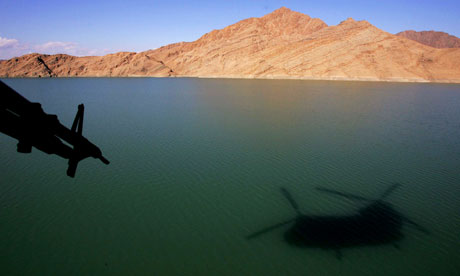
The US military covered up a reported surface-to-air missile strike by the Taliban that shot down a Chinook helicopter over Helmand in 2007 and killed seven soldiers, including a British military photographer, the war logs show.
The strike on the twin-rotor helicopter shows the Taliban enjoyed sophisticated anti-aircraft capabilities earlier than previously thought, casting new light on the battle for the skies over Afghanistan.
Hundreds of files detail the efforts of insurgents, who have no aircraft, to shoot down western warplanes. The war logs detail at least 10 near-misses by missiles in four years against coalition aircraft, one while refuelling at 11,000ft and another involving a suspected Stinger missile of the kind supplied by the CIA to Afghan rebels in the 1980s.
But if American and British commanders were worried about the missile threat, they downplayed it in public – to the extent of ignoring their own pilots' testimony. The CH-47 Chinook was shot down on 30 May 2007 after dropping troops at the strategic Kajaki dam in Helmand where the British were leading an anti-Taliban drive. Witnesses reported that a missile struck the left rear engine of the aircraft, causing it to burst into flames and nosedive into the ground. All on board died, including 28-year-old Corporal Mike Gilyeat of the Royal Military Police.
Later that day Nato and US officials suggested the helicopter, codenamed Flipper, had been brought down by a rocket-propelled grenade – effectively, a lucky hit. "It's not impossible for small-arms fire to bring down a helicopter," Nato spokesman Major John Thomas told Reuters in Kabul. A US official said it had "probably been brought down by a rocket-propelled grenade [RPG]".
But US pilot logs show they were certain the missile was not an RPG and was most likely a Manpad – the military term for a shoulder-launched surface-to-air missile. "Witness statements from Chalk 3 [another aircraft] suggest Flipper was struck by Manpad," it reads.
Those fears were confirmed by two Apache attack helicopters hovering over the crash site that came under fire from more missiles, twice in 30 minutes. Both missiles missed, and the pilots subsequently reported that they were "not an RPG" but a "probable first-generation MANPAD".
"Clearly the Taliban were attempting to down an Apache after downing the CH-47," it read.
The crash and its handling highlight steadily escalating US worries amid a stream of intelligence reports, also captured in the files, that suggest the Taliban were being supplied with missiles from Iran and Pakistan.
One internal report in September 2005 warned that Taliban commanders in Zabul and Kandahar provinces had acquired missiles they called "number two Stinger", for about $1,000 (£650) each. Nine months later came the first of at least 10 near-miss reports.
In June 2006 a Black Hawk medevac helicopter came under fire 25 miles from Kandahar. The missile changed course after the American crew launched six diversionary flares. "The crew chief saw only the smoke trail due to evasive maneuvering but determined that the missile was a type of MANPAD," the subsequent report read – the second Manpad attack that month.
In June 2007, shortly after the American Chinook was shot down in Kajaki, a British Chinook had a close shave when its missile warning system activated 6,000ft over Helmand. "The crew looked out their window and observed a projectile with a white-grey tight spiral smoke trail rising from their 7 o'clock, climbing through their level and exploding 2000ft 3000ft above and 0.5-1nm [nautical miles] ahead of the aircraft," it read.
"The airburst was described as a dark grey cloud. All crew members heard a loud bang and the projectile passed within 50ft of the aircraft."
A month later a C-130 aircraft was refueling 11,000ft over Nimroz province when a crew member spotted a "bright flash" followed by a second flash 2 nautical miles away. "A corkscrew smoke trale [sic] was observed and the aircraft dispensed flares" just before projectiles streaked past the plane, read the assessment.
The anti-aircraft missile threat has a strong historical resonance in Afghanistan. CIA-supplied Stingers punched dozens of Soviet Hind helicopters from the skies in the 1980s, and were considered to have played a key role in forcing the Soviets to abandon the country in 1989.
Western worries that the phenomenon could be repeated in this war have made surface-to-air missiles a favourite topic among intelligence informers, whose unconfirmed accounts of meddling foreign powers stuff the files.
As fighting intensified in April 2007 one unidentified source told an American officer that seven Manpads purchased by Iran from Algeria had been "clandestinely transported from Mashhad in Iran across the border into Afghanistan". Other reports, also unconfirmed, accused Pakistan's Inter-Services Intelligence of supplying weapons or missile-trainers to the Taliban.
More concretely, the files contain first-hand accounts of Afghan tribesmen slipping into US bases offering to sell their private stock of missiles. In one instance four elders from Balkh, near Mazar-i-Sharif, arrived with a clutch of blurry photographs of missiles. "Their motivation is monetary gain," the report notes.
The Americans were particularly interested in retrieving unused Stingers from the stockpile of up to 2,000 distributed in the 1980s. One report from Jowzjan in 2005 said an Afghan intelligence chief was authorised to pay $5,000 for older SA-7 missiles and $15,000 for a Stinger. "The NDS [National Directorate of Security] had been ordered to buy all they can acquire, to stop them falling into OMF [opposing military force] hands," it says.
Military experts say many Stingers may no longer be operational – due to drained batteries, for instance – but on at least one occasion US troops feared they were under fire from their own weapons. A Black Hawk helicopter leaving an airbase in Paktika province in July 2007 came under fire from two missiles that crew members believed were Stingers. It was a "probable Stinger due to flight characteristics, the smoke trail going straight up, then turn towards aircraft and lack of cork screws".
The assessment was provided by a crew member who said he had previously operated the Stinger system. It is not recorded whether his assessment was later confirmed.
Another eye-catching intelligence report from January 2009 says an Iranian agent, Hussein Razza, had arrived in Marjah in Helmand carrying four Stingers. There have been no reports since of aircraft being shot down in Marjah, where British and American troops launched a major offensive last February.
But for all the worries about Manpads and Stingers, the Taliban's most potent weapon against US aircraft was a carefully aimed RPG. In June 2005 a Taliban rocket shot down a Chinook in Kunar, killing all 16 special forces troops on board. Another RPG strike in 2007 forced a Black Hawk in Wardak province to crash-land.
As fighting surged in the runup to the last election in August 2009, one report noted 32 RPG attacks against aircraft across Afghanistan in the previous month. "RPGs remain the most lethal weapon system used in theatre, accounting for the majority of A/C [aircraft] losses," it said.
But some missile attacks remained a mystery. In August 2007 two Harrier jets flying at 270mph were circling a target when "an unidentified rocket" passed between them, leaving a thick smoke trail that soared above 21,000ft and took three minutes to dissipate. Task Force Pegasus, the US army aviation command, was puzzled. "The signature reported by the crew does not match any known weapon in Afghanistan. Every MANPAD and known rockets burn out at half the height reported by the crew."
The strike on the twin-rotor helicopter shows the Taliban enjoyed sophisticated anti-aircraft capabilities earlier than previously thought, casting new light on the battle for the skies over Afghanistan.
Hundreds of files detail the efforts of insurgents, who have no aircraft, to shoot down western warplanes. The war logs detail at least 10 near-misses by missiles in four years against coalition aircraft, one while refuelling at 11,000ft and another involving a suspected Stinger missile of the kind supplied by the CIA to Afghan rebels in the 1980s.
But if American and British commanders were worried about the missile threat, they downplayed it in public – to the extent of ignoring their own pilots' testimony. The CH-47 Chinook was shot down on 30 May 2007 after dropping troops at the strategic Kajaki dam in Helmand where the British were leading an anti-Taliban drive. Witnesses reported that a missile struck the left rear engine of the aircraft, causing it to burst into flames and nosedive into the ground. All on board died, including 28-year-old Corporal Mike Gilyeat of the Royal Military Police.
Later that day Nato and US officials suggested the helicopter, codenamed Flipper, had been brought down by a rocket-propelled grenade – effectively, a lucky hit. "It's not impossible for small-arms fire to bring down a helicopter," Nato spokesman Major John Thomas told Reuters in Kabul. A US official said it had "probably been brought down by a rocket-propelled grenade [RPG]".
But US pilot logs show they were certain the missile was not an RPG and was most likely a Manpad – the military term for a shoulder-launched surface-to-air missile. "Witness statements from Chalk 3 [another aircraft] suggest Flipper was struck by Manpad," it reads.
Those fears were confirmed by two Apache attack helicopters hovering over the crash site that came under fire from more missiles, twice in 30 minutes. Both missiles missed, and the pilots subsequently reported that they were "not an RPG" but a "probable first-generation MANPAD".
"Clearly the Taliban were attempting to down an Apache after downing the CH-47," it read.
The crash and its handling highlight steadily escalating US worries amid a stream of intelligence reports, also captured in the files, that suggest the Taliban were being supplied with missiles from Iran and Pakistan.
One internal report in September 2005 warned that Taliban commanders in Zabul and Kandahar provinces had acquired missiles they called "number two Stinger", for about $1,000 (£650) each. Nine months later came the first of at least 10 near-miss reports.
In June 2006 a Black Hawk medevac helicopter came under fire 25 miles from Kandahar. The missile changed course after the American crew launched six diversionary flares. "The crew chief saw only the smoke trail due to evasive maneuvering but determined that the missile was a type of MANPAD," the subsequent report read – the second Manpad attack that month.
In June 2007, shortly after the American Chinook was shot down in Kajaki, a British Chinook had a close shave when its missile warning system activated 6,000ft over Helmand. "The crew looked out their window and observed a projectile with a white-grey tight spiral smoke trail rising from their 7 o'clock, climbing through their level and exploding 2000ft 3000ft above and 0.5-1nm [nautical miles] ahead of the aircraft," it read.
"The airburst was described as a dark grey cloud. All crew members heard a loud bang and the projectile passed within 50ft of the aircraft."
A month later a C-130 aircraft was refueling 11,000ft over Nimroz province when a crew member spotted a "bright flash" followed by a second flash 2 nautical miles away. "A corkscrew smoke trale [sic] was observed and the aircraft dispensed flares" just before projectiles streaked past the plane, read the assessment.
The anti-aircraft missile threat has a strong historical resonance in Afghanistan. CIA-supplied Stingers punched dozens of Soviet Hind helicopters from the skies in the 1980s, and were considered to have played a key role in forcing the Soviets to abandon the country in 1989.
Western worries that the phenomenon could be repeated in this war have made surface-to-air missiles a favourite topic among intelligence informers, whose unconfirmed accounts of meddling foreign powers stuff the files.
As fighting intensified in April 2007 one unidentified source told an American officer that seven Manpads purchased by Iran from Algeria had been "clandestinely transported from Mashhad in Iran across the border into Afghanistan". Other reports, also unconfirmed, accused Pakistan's Inter-Services Intelligence of supplying weapons or missile-trainers to the Taliban.
More concretely, the files contain first-hand accounts of Afghan tribesmen slipping into US bases offering to sell their private stock of missiles. In one instance four elders from Balkh, near Mazar-i-Sharif, arrived with a clutch of blurry photographs of missiles. "Their motivation is monetary gain," the report notes.
The Americans were particularly interested in retrieving unused Stingers from the stockpile of up to 2,000 distributed in the 1980s. One report from Jowzjan in 2005 said an Afghan intelligence chief was authorised to pay $5,000 for older SA-7 missiles and $15,000 for a Stinger. "The NDS [National Directorate of Security] had been ordered to buy all they can acquire, to stop them falling into OMF [opposing military force] hands," it says.
Military experts say many Stingers may no longer be operational – due to drained batteries, for instance – but on at least one occasion US troops feared they were under fire from their own weapons. A Black Hawk helicopter leaving an airbase in Paktika province in July 2007 came under fire from two missiles that crew members believed were Stingers. It was a "probable Stinger due to flight characteristics, the smoke trail going straight up, then turn towards aircraft and lack of cork screws".
The assessment was provided by a crew member who said he had previously operated the Stinger system. It is not recorded whether his assessment was later confirmed.
Another eye-catching intelligence report from January 2009 says an Iranian agent, Hussein Razza, had arrived in Marjah in Helmand carrying four Stingers. There have been no reports since of aircraft being shot down in Marjah, where British and American troops launched a major offensive last February.
But for all the worries about Manpads and Stingers, the Taliban's most potent weapon against US aircraft was a carefully aimed RPG. In June 2005 a Taliban rocket shot down a Chinook in Kunar, killing all 16 special forces troops on board. Another RPG strike in 2007 forced a Black Hawk in Wardak province to crash-land.
As fighting surged in the runup to the last election in August 2009, one report noted 32 RPG attacks against aircraft across Afghanistan in the previous month. "RPGs remain the most lethal weapon system used in theatre, accounting for the majority of A/C [aircraft] losses," it said.
But some missile attacks remained a mystery. In August 2007 two Harrier jets flying at 270mph were circling a target when "an unidentified rocket" passed between them, leaving a thick smoke trail that soared above 21,000ft and took three minutes to dissipate. Task Force Pegasus, the US army aviation command, was puzzled. "The signature reported by the crew does not match any known weapon in Afghanistan. Every MANPAD and known rockets burn out at half the height reported by the crew."
Iran's covert operations in Afghanistan
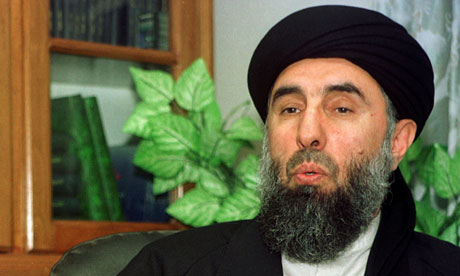
Iran is engaged in an extensive covert campaign to arm, finance, train and equip Taliban insurgents, Afghan warlords allied to al-Qaida and suicide bombers fighting to eject British and western forces from Afghanistan, according to classified US military intelligence reports contained in the war logs.
The secret "threat reports", mostly comprising raw data provided by Afghan spies and paid informants, cannot be corroborated individually. Even if the claims are accurate, it is unclear whether the activities they describe took place with the full knowledge of Tehran or are the work of hardline elements of the semi-autonomous Islamic Revolutionary Guard Corps, ideological sympathisers of the Taliban, arms smugglers or criminal gangs.
The Iranian government has repeatedly denied accusations that it is aiding militants fighting to oust President Hamid Karzai's pro-western government. It blames the presence of western forces for Afghanistan's instability.
Summaries of classified diplomatic cables produced by the US embassy in Kabul, contained in the war logs, reveal high-level concern about Tehran's growing political influence in Afghanistan. Senior US and Afghan officials appear at a loss over how to counter Iran's alleged bribery and manipulation of opposition parties and MPs whom Afghan government officials dismiss as Tehran's "puppets".
If the war logs are to be believed, Iranian involvement in Afghanistan has steadily widened from 2004 to today, amid record levels of military and civilian casualties and spreading violence.
A threat report originated by Isaf (International Security Assistance Force) headquarters in February 2005, covering Regional Command South, classified secret, says for example that Taliban leaders and former officials of the Taliban government toppled by the US in 2001 are planning a series of attacks in Helmand and Uruzgan provinces.
"This joint group currently resides in Iran. The group consists of eight main leaders, all of whom travel with seven bodyguards," the report says. "The leaders travel into Afghanistan to recruit soldiers … Initially, the joint group will attack NGOs and GOA [government of Afghanistan] officials … If these attacks are successful, they will start to attack US forces. The group will use hit-and-run tactics using AK-47 assault rifles and IEDs."
In addition, the report claims: "The Iranian government has offered each member of the group 100,000 rupees ($1,740) for any Afghan soldier killed and 200,000 rupees ($3,481) for any government official."
In January 2005 it is reported that Iranian intelligence has delivered 10 million Afghanis ($212,000) to a location on Iran's border. In the language of the war logs, "Iranian intelligence" usually appears to be a reference to Sepah-e Pasdaran-e Enghelab-e Islami – the Iranian Islamic Revolutionary Guards Corps.
"The money was transferred to a 1990s model white Toyota Corolla station wagon … hidden with various foodstuffs. The Corolla was occupied by four members of the Hezb-e-Islami Gulbuddin [HIG] terrorist organisation [the al-Qaida-allied militia led by the former mujahideen leader and notorious warlord Gulbuddin Hekmatyar]. The money was transported to an unknown location," it is claimed.
The war logs refer to other covert Iranian or Iranian-backed activities. Whether they carry official blessing is unclear. In June 2006 it is reported that two Iranian "secret service" officers have arrived in Syahgerd village in Parwan province with false Afghan identities. The two have been previously spotted in Kabul. Their cover names are provided. Abdul Jalil is about 37 and has a "short black beard"; Ahmaddin is about 25, "tall, white complexion, long hair and brown eyes".
The report, sourced to "humint" (human intelligence), continues: "These two Iranians are tasked to instigate local Afghan people into making propaganda against the Afghan government authorities and CF [coalition forces] members. Also they are helping HIG and Taliban members in carrying out terrorist attacks against the Afghan governmental authorities and CF members, especially against the American forces." No evidence is offered to corroborate this statement.
This report also claims: "In Birjand, Iran, there is an important base where Iranian officials train Taliban and HIG members. From that location they use [sic] to send to Afghanistan explosive devices and vehicles ready to be used as SVBIEDs [suicide vehicle-borne improvised explosive devices]."
This is not the first time Iranian links to IEDs and suicide bombings have been alleged. In May 2006, a report from "Source NY-9013" claims Hekmatyar's men are equipping 200 vehicles to deliver IEDs after having bought the cars in Pakistan and Iran. "HIG members in Pakistan provide the remote control devices for these cars." In April, 2008, the Taliban are said to have received Iranian-made parts for 20 remote-controlled IEDs to be used against the British in Sangin.
If the war logs intelligence is to be believed, Iran is also ready to host Taliban leaders and their men, to offer treatment if they are injured in the fighting and act as a conduit for foreign insurgents anxious to join the fray. A report marked secret, and dated September 2005 , lists a number of Taliban commanders who have gathered in Mashhad, Iran, supposedly to plan future attacks. Another in October 2006 claims Iranians have "provided support on the ground by organising transports for injured people [meaning Taliban fighters] to Tehran". No corroboration is offered.
In March 2009 military intelligence reports that a party of more than 100 Afghan and foreign-born Taliban, including 15 Chechen fighters, have moved from Iran into Afghanistan with the intention of launching suicide attacks. In May 2009, General Stanley McChrystal, the then US and Nato commander, appears to refer specifically to this intelligence finding. "The training [of insurgents] that we have seen occurs inside Iran with fighters moving inside Iran," he said.
If some of the more creative reports are to be believed, Iranian subversion also extends to alleged plans to slip poison into the tea of Afghan government officials, supposedly a tidier method of assassination than suicide bombs; and the fomenting of political unrest in the relatively stable northern provinces.
Summaries of US embassy diplomatic cables and situation assessments contained and distributed through the war logs offer firmer ground than some of the raw intelligence data, given that they are evidently written by American officials and represent an official record, or official evaluation, of high-level meetings.
The cables reveal deep concerns among the western allies and Karzai's government about Tehran's parallel attempt to extend its political leverage in Afghanistan, in part by allegedly proffering lavish bribes.
The cables include accounts of consultations between British Foreign Office officials and senior US counterparts such as Eliot Cohen, US secretary of state Condoleezza Rice's then special regional representative, the Pentagon's Eric Edelman, and former US ambassador to Kabul Ronald Neumann. They discuss, among other things, how best to handle Karzai and promote national reconciliation without talking to the Taliban.
"Over the past several months Iran has taken a series of steps to expand and deepen its influence," says a secret cable sourced to the US embassy in Kabul and written in May 2007 by CSTC-A DCG for Pol-Mil Affairs [combined security transition command deputy commanding general for political and military affairs]. The cable cites the creation of the opposition National Front and National Unity Council, which it claims are under Iranian influence.
These worries notwithstanding, the cables also reflect the Afghan government's continuing perception that it must maintain friendly relations with Iran, in order to "marginalise" pro-Iranian groups in the country but also because of its own chronic weakness.
A "non-combat event" intelligence report dated April 2007 says that "the [Afghan] ministry of foreign affairs [MFA] wants to keep the issue of the Iranian-made weapons recently found in Kandahar under the radar screen in the lead-up to the visit of Iranian president Mahmoud Ahmadinejad to Afghanistan. According to MFA, President Karzai supports the plan to avoid additional friction with Afghanistan's neighbours". Anxious to avoid more problems with Karzai, the US apparently agrees to play along.
The secret "threat reports", mostly comprising raw data provided by Afghan spies and paid informants, cannot be corroborated individually. Even if the claims are accurate, it is unclear whether the activities they describe took place with the full knowledge of Tehran or are the work of hardline elements of the semi-autonomous Islamic Revolutionary Guard Corps, ideological sympathisers of the Taliban, arms smugglers or criminal gangs.
The Iranian government has repeatedly denied accusations that it is aiding militants fighting to oust President Hamid Karzai's pro-western government. It blames the presence of western forces for Afghanistan's instability.
Summaries of classified diplomatic cables produced by the US embassy in Kabul, contained in the war logs, reveal high-level concern about Tehran's growing political influence in Afghanistan. Senior US and Afghan officials appear at a loss over how to counter Iran's alleged bribery and manipulation of opposition parties and MPs whom Afghan government officials dismiss as Tehran's "puppets".
If the war logs are to be believed, Iranian involvement in Afghanistan has steadily widened from 2004 to today, amid record levels of military and civilian casualties and spreading violence.
A threat report originated by Isaf (International Security Assistance Force) headquarters in February 2005, covering Regional Command South, classified secret, says for example that Taliban leaders and former officials of the Taliban government toppled by the US in 2001 are planning a series of attacks in Helmand and Uruzgan provinces.
"This joint group currently resides in Iran. The group consists of eight main leaders, all of whom travel with seven bodyguards," the report says. "The leaders travel into Afghanistan to recruit soldiers … Initially, the joint group will attack NGOs and GOA [government of Afghanistan] officials … If these attacks are successful, they will start to attack US forces. The group will use hit-and-run tactics using AK-47 assault rifles and IEDs."
In addition, the report claims: "The Iranian government has offered each member of the group 100,000 rupees ($1,740) for any Afghan soldier killed and 200,000 rupees ($3,481) for any government official."
In January 2005 it is reported that Iranian intelligence has delivered 10 million Afghanis ($212,000) to a location on Iran's border. In the language of the war logs, "Iranian intelligence" usually appears to be a reference to Sepah-e Pasdaran-e Enghelab-e Islami – the Iranian Islamic Revolutionary Guards Corps.
"The money was transferred to a 1990s model white Toyota Corolla station wagon … hidden with various foodstuffs. The Corolla was occupied by four members of the Hezb-e-Islami Gulbuddin [HIG] terrorist organisation [the al-Qaida-allied militia led by the former mujahideen leader and notorious warlord Gulbuddin Hekmatyar]. The money was transported to an unknown location," it is claimed.
The war logs refer to other covert Iranian or Iranian-backed activities. Whether they carry official blessing is unclear. In June 2006 it is reported that two Iranian "secret service" officers have arrived in Syahgerd village in Parwan province with false Afghan identities. The two have been previously spotted in Kabul. Their cover names are provided. Abdul Jalil is about 37 and has a "short black beard"; Ahmaddin is about 25, "tall, white complexion, long hair and brown eyes".
The report, sourced to "humint" (human intelligence), continues: "These two Iranians are tasked to instigate local Afghan people into making propaganda against the Afghan government authorities and CF [coalition forces] members. Also they are helping HIG and Taliban members in carrying out terrorist attacks against the Afghan governmental authorities and CF members, especially against the American forces." No evidence is offered to corroborate this statement.
This report also claims: "In Birjand, Iran, there is an important base where Iranian officials train Taliban and HIG members. From that location they use [sic] to send to Afghanistan explosive devices and vehicles ready to be used as SVBIEDs [suicide vehicle-borne improvised explosive devices]."
This is not the first time Iranian links to IEDs and suicide bombings have been alleged. In May 2006, a report from "Source NY-9013" claims Hekmatyar's men are equipping 200 vehicles to deliver IEDs after having bought the cars in Pakistan and Iran. "HIG members in Pakistan provide the remote control devices for these cars." In April, 2008, the Taliban are said to have received Iranian-made parts for 20 remote-controlled IEDs to be used against the British in Sangin.
If the war logs intelligence is to be believed, Iran is also ready to host Taliban leaders and their men, to offer treatment if they are injured in the fighting and act as a conduit for foreign insurgents anxious to join the fray. A report marked secret, and dated September 2005 , lists a number of Taliban commanders who have gathered in Mashhad, Iran, supposedly to plan future attacks. Another in October 2006 claims Iranians have "provided support on the ground by organising transports for injured people [meaning Taliban fighters] to Tehran". No corroboration is offered.
In March 2009 military intelligence reports that a party of more than 100 Afghan and foreign-born Taliban, including 15 Chechen fighters, have moved from Iran into Afghanistan with the intention of launching suicide attacks. In May 2009, General Stanley McChrystal, the then US and Nato commander, appears to refer specifically to this intelligence finding. "The training [of insurgents] that we have seen occurs inside Iran with fighters moving inside Iran," he said.
If some of the more creative reports are to be believed, Iranian subversion also extends to alleged plans to slip poison into the tea of Afghan government officials, supposedly a tidier method of assassination than suicide bombs; and the fomenting of political unrest in the relatively stable northern provinces.
Summaries of US embassy diplomatic cables and situation assessments contained and distributed through the war logs offer firmer ground than some of the raw intelligence data, given that they are evidently written by American officials and represent an official record, or official evaluation, of high-level meetings.
The cables reveal deep concerns among the western allies and Karzai's government about Tehran's parallel attempt to extend its political leverage in Afghanistan, in part by allegedly proffering lavish bribes.
The cables include accounts of consultations between British Foreign Office officials and senior US counterparts such as Eliot Cohen, US secretary of state Condoleezza Rice's then special regional representative, the Pentagon's Eric Edelman, and former US ambassador to Kabul Ronald Neumann. They discuss, among other things, how best to handle Karzai and promote national reconciliation without talking to the Taliban.
"Over the past several months Iran has taken a series of steps to expand and deepen its influence," says a secret cable sourced to the US embassy in Kabul and written in May 2007 by CSTC-A DCG for Pol-Mil Affairs [combined security transition command deputy commanding general for political and military affairs]. The cable cites the creation of the opposition National Front and National Unity Council, which it claims are under Iranian influence.
These worries notwithstanding, the cables also reflect the Afghan government's continuing perception that it must maintain friendly relations with Iran, in order to "marginalise" pro-Iranian groups in the country but also because of its own chronic weakness.
A "non-combat event" intelligence report dated April 2007 says that "the [Afghan] ministry of foreign affairs [MFA] wants to keep the issue of the Iranian-made weapons recently found in Kandahar under the radar screen in the lead-up to the visit of Iranian president Mahmoud Ahmadinejad to Afghanistan. According to MFA, President Karzai supports the plan to avoid additional friction with Afghanistan's neighbours". Anxious to avoid more problems with Karzai, the US apparently agrees to play along.
Subscribe to:
Comments (Atom)